Blog

Archived posts: January 2012

Dickens Dark London

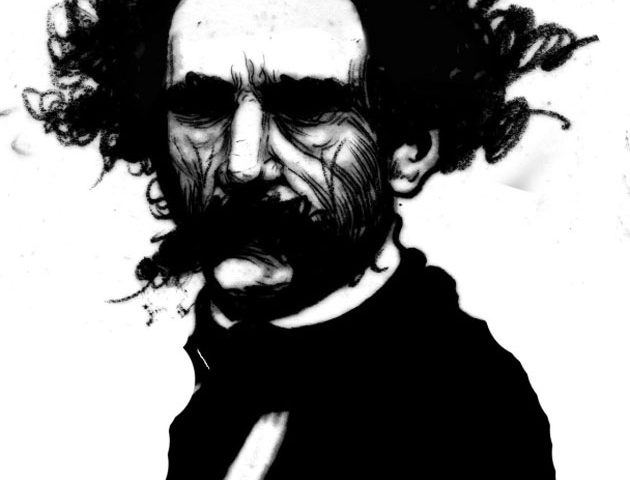
You’d be hard pressed not to have noticed it, but this year is the 200 year anniversary of Charles Dickens’ birthday. The Museum of London is hosting a major exhibition about his life, and to coincide with that, they’ve created a rather delicious iPhone & iPad app called Dickens Dark London.

The app is an interactive graphic novel, illustrated by the frankly brilliant David Foldvari, and based on Dickens’ Sketches by Boz. It will run to five issues (just the first one is available so far), each one centred on a different location. As well as Foldvari’s stunning images, the app includes excerpts from the sketches, read in gravelly tones by the actor Mark Strong; as well as a map that shows story locations on a map from 1862, which overlays the standard Google Maps.

The first issue (available free) is set in Covent Garden’s Seven Dials - here are a few of the pages:

Simply stunning.

The Lengths

It’s a dog’s life.

Eddie is an art-school drop out from Barking who likes sports, visual art and loafing by the river. He’s sort of seeing someone, but he also does a bit of rent on the side… though he hasn’t told his boyfriend Dan that just yet. Oh, and he’s also got a crush on Nelson, who’s tall, muscular, hung, and can fulfil your wildest fantasties.

Welcome to The Lengths.

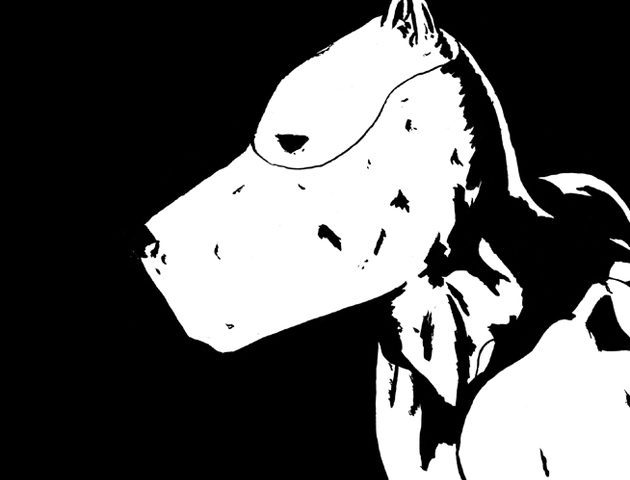
Drawn in stark monochrome, The Lengths is the brilliant new comic series written and illustrated by Howard Hardiman. Set in a contemporary London where men are dogs, literally and metaphorically, it revolves around Eddie, a young gay guy who’s trying to have a successful relationship while working as a rent boy.

The illustrations are powerful yet sensitive, with a real eye for physical form, but fortunately without ever becoming simply pornographic, despite the subject matter. The characters might all have the heads of dogs, but they feel like people you know all too well.

The comic is four issues in so far (you can buy all four as a bundle for just £10), and Issue 5 is on its way mighty soon.

Can’t wait.

Shaped by War

We finally made our way over to the Imperial War Museum London yesterday to check out the excellent Don McCullin retrospective, Shaped by War, that’s been running there since October.

McCullin is one of the world’s most respected photojournalists, best known for his war photography (though his street photography at home in the UK, as well as his more recent landscapes, are also fantastic); and it’s his work from the world’s many war-zones that is the focus of this show.

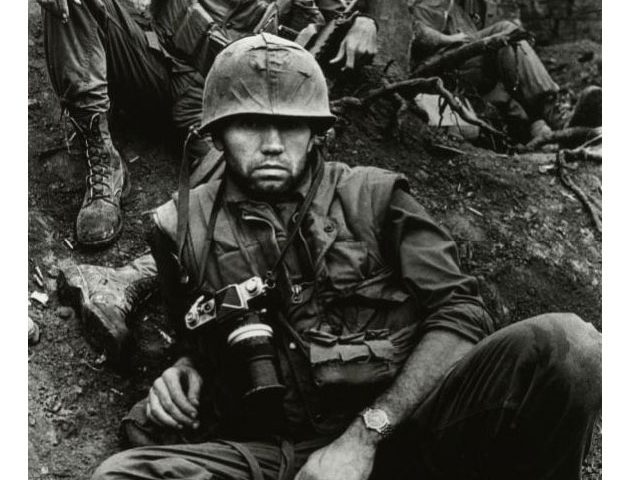
A self-confessed war junkie, McCullin worked extensively for The Sunday Times in the 60s and 70s, travelling to the most dangerous places on the planet to bring back images of the events there. Perhaps one of his most famous images is this shot of a shell-shocked US marine during Vietnam War:

In the show there’s a print of the shot showing McCullin’s notes about its printing, which is fascinating. It shows the care and attention paid to the printing of a photographic image, but also shows how the analogue process of printing a photograph shares a lot with the the digital process of adjusting an image in Photoshop.

The show features a great half-hour filmed interview with McCullin in which he talks candidly about his experiences – about how he taught himself photography from a series of photographic books, about growing up in Finsbury Park, about the darkness inside him that comes from seeing the things he’s seen, and about moments of near-madness.

(Above: portrait of Don McCullin by Nik Wheeler)

The show also has a collection of ephemera from McCullin’s life, including one of his Nikon F Cameras, which was his by a bullet from an Khmer Rouge AK47, narrowly missing his head.

He’s had an incredible life, which you can read about in his autobiography Unreasonable Behaviour. You can see more images from the show in this Guardian slideshow, and in the book of the exhibition, Shaped By War. Read more about him in this Guardian interview, or watch this film from the Tate.

The show at the Imperial War Museum runs until 15 April. Get along if you can.

The Next Chapter

People have been foretelling the death of the book for years now.

Obviously, that’s not going to happen entirely, but more and more of our reading is already taking place on e-readers (Amazon’s Kindle, Apple’s iPad, Barnes & Noble’s Nook, Sony’s Reader, and WH Smith’s Kobo amongst others).

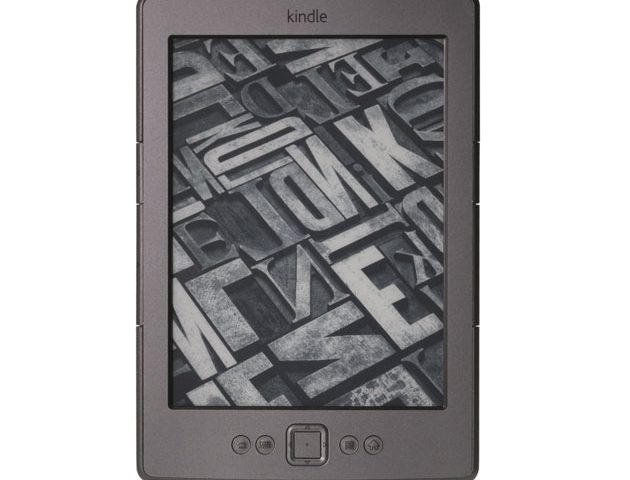
The Kindle is the current king, currently available in the UK just in its monotone e-ink format, but in the US also in its full-colour multimedia Fire version, which is much closer to Apple’s ubiquitous iPad.

These days books are released in a whole stack of different formats. Nick Cave’s The Death of Bunny Munro, originally available as a signed and numbered limited edition hardback, is now available as a paperback, as an e-book for all the major formats, and as a multimedia app for the iPhone and iPad, and also as an audio book.

For book designers, whether they work on covers, texts, or on integrated books (words and pictures), the industry is obviously undergoing a metamorphosis. A metamorphosis that brings possibilities as well as peril.

Looking just at book covers, which are designed to lure in readers, they’re no longer primarily experienced physically, but instead as tiny thumbnails on a computer screen or handheld device. Instead of a wealth of sizes, of formats, of textures and of finishes, we just have pixels.

This isn’t a massively new situation – people have been buying books from Amazon for a good few years now. But where previously you would still end up with a physical book in your hands, that’s no longer necessarily the case.

To add insult to injury, in the current incarnation of iBooks on the iPad and iPhone you hardly even get to see covers at full size – they blink past momentarily when you start a book, but that’s about it. You do at least get a full size cover on the Kindle (well, full screen-size that is, which is always the same size no matter what book you’re reading), but on the e-ink version it’s always black and white.

At the same time though, there’s a resurgence in the love of the book as an object, with all the main publishers pumping out high-end versions of their backlists, such as Penguin’s Clothbound Classics. Surely a designer’s playground.

So, what is the next chapter for books?

For what it’s worth, our best guess is that paperbacks will start to disappear, as more and more people buy e-readers (how long is it before a major author releases a best-seller just as an e-book?). Hopefully though the various bits of e-book software will develop so that covers will still be considered a fundamental part of a book. We can also see lavish editions of hardbacks becoming more common; and integrated books perhaps becoming more and more interactive, following the lead of magazines.

But heck, what do we know?

Fortunately, if you’re out in New York, you can go and listen to some folk who might know just a little bit more.

The Next Chapter – The Design and Publishing of the Digital Book is a talk taking place at Parsons on Thursday 26 January. It’s organised by the AIGA NY, and is moderated by Chip Kidd. Should be a good one.

Hopefully they’ll be recording it for those of us who can’t make it…

Random Spectacular

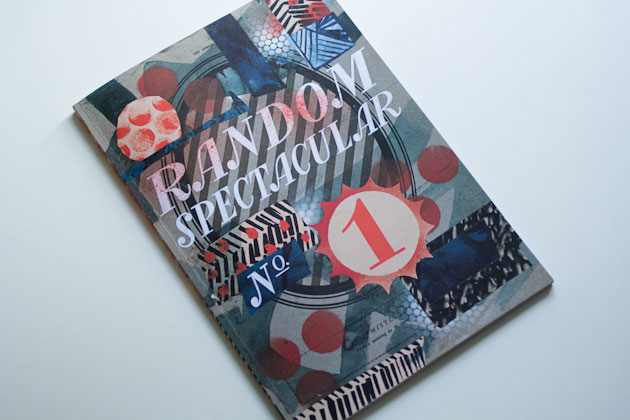
We’ve recently been making our way through the first issue of Random Spectacular, the lovely limited-edition magazine created by the folks at St Jude’s Prints, and it’s just great.

The magazine was produced in a print run of just 750 copies (all of which sold within 48 hours), the profits from which go to Maggie’s Cancer Caring Centres. The magazine features a mix of stories and illustrations from a wide range of very talented people. Here’s a selection of just some of those:

Mark Hearld (above) has put together a menagerie of random and spectacular animals.

Artist, designer, writer and photographer Jake Tilson shows the typefaces he designed for his recent cookery book In at the Deep End.

There’s a lovely interview with the Gentle Author of the fantastic daily blog, Spitalfields Life.

And we also liked this piece by Phil Abel of Hand & Eye Letterpress about the joys of machine-made printing.

Though the first issue has sold out, they’re planning subsequent issues, each one taking a different format. Sign up at the Random Spectacular site to find out more.