Blog

Archived posts: Photography

Shaped by War

We finally made our way over to the Imperial War Museum London yesterday to check out the excellent Don McCullin retrospective, Shaped by War, that’s been running there since October.

McCullin is one of the world’s most respected photojournalists, best known for his war photography (though his street photography at home in the UK, as well as his more recent landscapes, are also fantastic); and it’s his work from the world’s many war-zones that is the focus of this show.

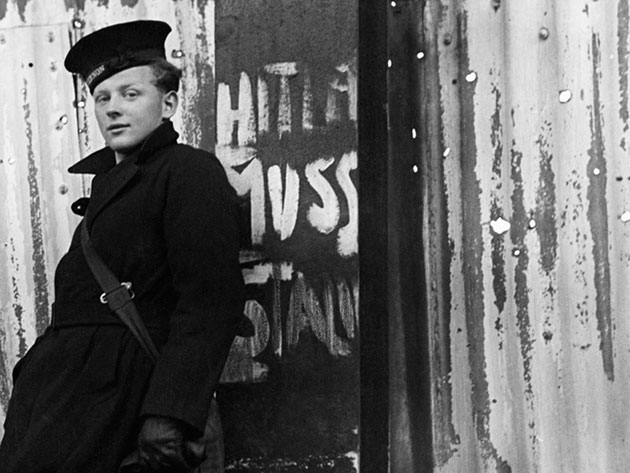
A self-confessed war junkie, McCullin worked extensively for The Sunday Times in the 60s and 70s, travelling to the most dangerous places on the planet to bring back images of the events there. Perhaps one of his most famous images is this shot of a shell-shocked US marine during Vietnam War:

In the show there’s a print of the shot showing McCullin’s notes about its printing, which is fascinating. It shows the care and attention paid to the printing of a photographic image, but also shows how the analogue process of printing a photograph shares a lot with the the digital process of adjusting an image in Photoshop.

The show features a great half-hour filmed interview with McCullin in which he talks candidly about his experiences – about how he taught himself photography from a series of photographic books, about growing up in Finsbury Park, about the darkness inside him that comes from seeing the things he’s seen, and about moments of near-madness.

(Above: portrait of Don McCullin by Nik Wheeler)

The show also has a collection of ephemera from McCullin’s life, including one of his Nikon F Cameras, which was his by a bullet from an Khmer Rouge AK47, narrowly missing his head.

He’s had an incredible life, which you can read about in his autobiography Unreasonable Behaviour. You can see more images from the show in this Guardian slideshow, and in the book of the exhibition, Shaped By War. Read more about him in this Guardian interview, or watch this film from the Tate.

The show at the Imperial War Museum runs until 15 April. Get along if you can.

Fog

We’ve been having a bit of fog in town these past few days, so we nipped out to take a few shots…

Ace Jet 170 on pigeons, planes, and asterisks in the sky

~ While Alistair is away cycling the length of Great Britain, we’ve invited twenty disgustingly talented people to each write a post for our blog. Today’s post is from the inimitable Richard Weston, the man behind the brilliant Ace Jet 170 blog. ~

207. That’s how many people know I am crazy about Instagram at the moment. Naturally nosey, it fits me like the proverbial hand attire. Spare moments, and some that aren’t actually spare, are spent peering into places I should probably not peer for potential Insta-fodder. Down darkened allies, over rooftops, into murky rivers. So far, it hasn’t got me into trouble.

On the surface Instagram looks like a gimmicky, fake retro photo filtering application. Masking, as it does, bloody awful photos in old-style falseness. You probably know of it, even if you don’t use it. Because I use it frequently, every day, I find it hard to imagine you aren’t at least aware of it and its auto-counterfeitery.

Perhaps you’re like I used to be. At first, I was repelled by Instagram’s faux photo styling. There’s no craft in it. You point, you click, you pick a filter. But hang on. Your crap photo, surprisingly, looks better. It really does. Often, not just better; more than better.

But the reality is, Instagram is much more than a tricksy little app for polishing your photographic turds. Photo sharing is ace. Arguably way more fun, certainly more intimate, than Twitter; it is the natural successor to moment-sharing-as-text. Especially for snoopers.

So we can show people what we’re seeing. We can show off a bit (hey, look where I am! / look what I’ve got!). And we can collect instances because we can feed them, effortlessly, straight into Flickr or Facebook. Or even into more purpose-built diarising apps like Momento.

And like the way Twitter can make you think more about the words you use and can act as a channel for those thoughts you have that are of no real value to anyone, Instagram can encourage you to look around more and snap the things you would ordinarily smile at and forget. Like the flock of pigeons that circle overhead, the planes that fly over our studio, and the asterisks in the sky.


~ Alistair is raising money for Cancer Research UK during his ride – please wander over to his Just Giving page and donate a little cash. ~

Angharad Lewis on On Reading

~ While Alistair is away cycling the length of Great Britain, we’ve invited twenty disgustingly talented people to each write a post for our blog. Today’s post is from one of our neighbours, the lovely Angharad Lewis, co-editor of Grafik Magazine, and partner at the rather fine Woodbridge & Rees. ~

Solitary, absorbing, transporting… reading is therapy, escape and meditation. One of my favourite photographers, André Kertész, knew the special pleasures of reading, and captured images of engrossed readers throughout his life. His book On Reading is a collection of the images he made of readers all around the world between 1915 and 1970.

Readers seek out solitary moments amidst the bustle of parks or backstage at theatres; they escape on rooftops and balconies to read; they snatch moments with discarded papers in the street. Kertész also captures the materiality of books themselves — stacked floor-to-ceiling in corners of rooms, lining the walls of libraries in neat, solid regiments, or crammed every which way into boxes on a book seller’s stall.

The digital silkiness of an iPad or ersatz leather binding of a kindle present a new and homogenised experience of reading that is alien to Kertész’s world — books with their sharp edges rounded off for convenience and smooth handling; no messy piles of papers and books required. What Kertész captured in On Reading was once universal and timeless but now looks suddenly and sadly archaic. But I prefer his images of readers to those in the iPad and Kindle ads.


~ Alistair is raising money for Cancer Research UK during his ride – please wander over to his Just Giving page and donate a little cash. ~

Direction – Space!

In June last year, we checked out the Central Saint Martins BA Graphic Design show, and one of the students whose work we noticed was Maria Gruzdeva, particularly her book of photographs from the Yuri Gagarin Russian State Science Research Cosmonauts Training Centre (also known as the Star City).

So it’s great to see that less than a year later, the book Direction – Space! has been published for real by Dewi Lewis Publishing – not bad given that Maria is still studying (doing her MA at LCC). Read more about the project in this Telegraph piece.

Free Veer Ts

The good folks over at Veer (the stock image & font library) have recently revamped their site, and in an attempt to coerce us into blogging about it are letting us have five of their Creatives Understand t-shirts to give away to you lot, totally free.

We’re generally a bit wary of this blog becoming a mindless promotional tool for PR machines, but we’ve always liked the way Veer works, so we’re happy giving them a quick nod. If you’d like one of their t-shirts*, just drop us a comment in the box below (make sure you fill in the email box) telling us what size you’d like (XS to XXL), and we’ll give you a shout.

They’ve also asked us to mention that they’ve got a 25% discount thing going with their various of their fonts over what’s left of the summer

*First come, first served; one per person; UK only

UPDATE – Thanks for entering folks – competition’s now closed, and we’ll be sending out the t-shirts to the five winners mighty soon.

Photographic ephemera

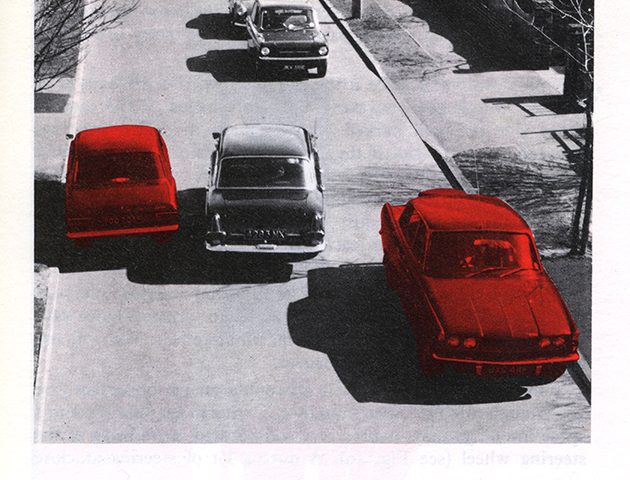
A few more bits of ephemera for your viewing pleasure, all from the days when people used to take photos using something called ‘film’. It came in small ‘rolls’ which you put into your camera, and generally allowed you to take 24 or 36 ‘exposures’. You would then take the film to a chemist, or specialist ‘photo lab’ to be ‘developed’, which could take between 1 hour and 1 week, and you would then get back a pack of ‘prints’. Happy days.

Ones to watch: CSM BA Graphics Show 2010

Well heck. Not sure what they’re feeding the students over at Central Saint Martins, but this year’s graphic design degree show is a humdinger.

It’s being held over at the spacious Nicholls & Clarke Building on Shoreditch High Street, and has been tightly curated so that you have a real sense of what you’re looking at – which is a huge help when you’re faced with such a vast quantity of work.

It’s always interesting to see what the visual vibe is each year – this year there was a lot of work that had the scent of the AA Print Studio about it (sometimes huge stinking whiffs of it in fact). That’s fairly natural, and just part of the ebb and flow of what’s hip in the design industry at any given time… but we hope that those students will find time to develop their own distinct visual language.

We’d been invited to pick out our favourite piece from the show for the annual Joss Turley award, so got a chance to have a fairly decent wander round before the beer really started flowing. Here are just a few of the faces we think are worth keeping an eye on:

MARIA GRUZDEVA

Maria Gruzdeva has put together a frankly beautiful, hugely polished book about the Yuri Gagarin Russian State Science Research Cosmonauts Training Centre (also known as the Star City) – a secretive military research facility where cosmonauts have lived and trained from the 1960s onwards. The book features her stunning documentary photography (above and top) from the Centre, as well as a wealth of archive material. It’s a hugely substantial piece of work, really brilliant.


BRENDAN OLLEY


We were blown away by Brendan Olley’s vast photographic prints, taken on a large-format camera on a trip to Svalbard, the world’s most northern town, sitting 300 miles from the North Pole. Brendan says the work “identifies the oddity of human behavior in relation to the landscape. Playgrounds and basketball courts are engulfed by snow and made redundant. Cars become reclaimed by the planet until eventually they become inseparable. It brings into question the reasons why one would wish to occupy this isolated place.”

They’re truly fantastic pictures, and you really need to see them at their actual size to get the full effect.

JAMIE HEARN

Jamie Hearn has created a beautiful pair of screenprints, one showing simplified household products stripped of their lettering, and then a second print showing just the lettering, which he’s hand drawn. Really delicious, and he’s also documented the work in a rather fine book (above). Great stuff.

HELEN LOVELEE

We really liked Helen Lovelee’s series of hand-drawn prints inspired by traditional Aboriginal philosophy – this one reads: “To stay warm on a cold desert night sleep between two small fires and close to your dog”. Which sounds mighty fine.

CHIHIRO SASAKI

We were also really taken with Chihiro Sasaki’s whimsical illustrations, particularly her series “The Territory of Human Being”, which looked at the invisible barriers people form to distance themelves from others. The illustrations have a really distinctive and charming style. Dead good.

EDWARD CORNISH

Okay, full disclosure, we’ve had Ed in here on a placement, so we already think his work is great – and he didn’t disappoint with this series of beautiful letterpressed prints. Tasty bit of framing too Ed.

STASSJA MROZINSKI

We chuckled at this one. Sometimes graphic design is allowed to be funny.

There’s stacks of other fine work, and the show runs until Monday 21 June. Get along there if you can.

The Ride Journal Issue 3

Theridejournal3

The third issue of The Ride Journal has just come out, and as with the previous two issues, it's a sumptuous mix of insightful and deeply personal writing, stunning photography, and fantastic illustrations.

Alistair's feeling dead chuffed, as they've included a piece he wrote about the all-night bike ride called the Dunwich Dynamo, featuring some stunning photos by Joe McGorty.

Pick up a copy online.

116 to Sea

Joemcgorty1

Back in July Alistair took part in the Dunwich Dynamo, the fantastic annual 116 mile all-night bike ride from London to the Suffolk coast, starting at London Fields around 8pm, and ending on the beach at Dunwich in the early hours of the following morning.

Alistair has written up his experience of the trip for the third issue of gorgeous cycling magazine The Ride Journal, to accompany a beautiful series of images by photographer Joe McGorty

Joemcgorty3

Here's an excerpt from the piece:

"Almost imperceptibly though, the group began to stir. Helmets were tightened. Route sheets pocketed. Watches checked. Clusters of riders rose to pick up their bikes, transforming into a loose pack with a single fixed purpose: to ride right through the night.

As the pinks and reds of a setting sun gave way to the deeper hues of night, we gently paced our way out of the tight bright urban sprawl into the space and calm of the countryside. Up ahead, the column of cyclists formed a shifting string of blinking red lights, stretched out along the road, twisting lithely like a living organism next to the stationary lights of the queuing traffic. It was a fantastic sight."

Joemcgorty2

To celebrate the launch of the third issue of the magazine, Joe and The Ride Journal, in collaboration with Exhibit X, are hosting 116 to Sea, an exhibition of the photographs at the Pebbledash Gallery in Stoke Newington, running from 7 – 13 November, with a private view on Friday 6 November.

(For more pics of the ride, check out Alistair's pics on his Dunwich Flickr set.)