Blog

Archived posts: Typography

Carters Steam Fair

A couple of weekends ago we got the chance to visit the fantastic Carters Steam Fair while it was visiting Clapham Common.

Carters is a vintage travelling fun fair, entirely run by the Carter family, after John and Anna Carter bought their first ride, the Jubilee Steam Gallopers (below) in 1977. The ride was originally built by Robert Tidman & Sons of Norwich, in 1895; and the Carters extensively repaired and renovated it to get it looking as fine as it does today.

The other main ride they have that’s run on steam is the glorious Excelsior Steam Yachts ride (top and below), built in 1921.

The whole fair features a staggering wealth of traditional fairground art and signwriting, featuring work by Hall and Fowle:

“The later rides owned by Carters Steam Fair are painted in a style of dramatic three-dimensionality by the masters of fairground painting in the first half of the 20th century: Hall and Fowle. Edwin Hall was a master painter producing some beautifully set out and composed Art Deco designs that still stand out to this day; Fred Fowle joined forces with him later. Fowle’s work is unmistakeable in its design and skill, using gold and aluminium leaf, flamboyant enamels and a lot of guts he made some of the most extraordinary and exuberant artwork that can be seen on the fair to this day, most notably the Skid, the Octopus, and the Hook a Duck hoopla stall which are owned by Carters Steam Fair.”

Everything on the fair is still hand-painted, with incredible skill and style, by the Carter family. Indeed, Joby Carter even runs 5-day signwriting courses – the next one coming up this November.

It’s just an amazing place to visit. They even have a coconut shy, and a fantastic penny arcade, which even has a suitably creepy Jolly Jack:

And of course the rides themselves are brilliant.

The fair will be at Belair Park in West Dulwich for the next two weekends, and travelling all round London through to November (check their full diary here). Do go along if you get a chance.

London Transport Museum Acton Depot

We made our way over to London Transport Museum’s Acton Depot yesterday – it’s where they house the majority of the collection that’s not on show at the museum itself. As part of the tube’s 150th anniversary they’re having a series of events there, and this weekend was their Open Weekend.

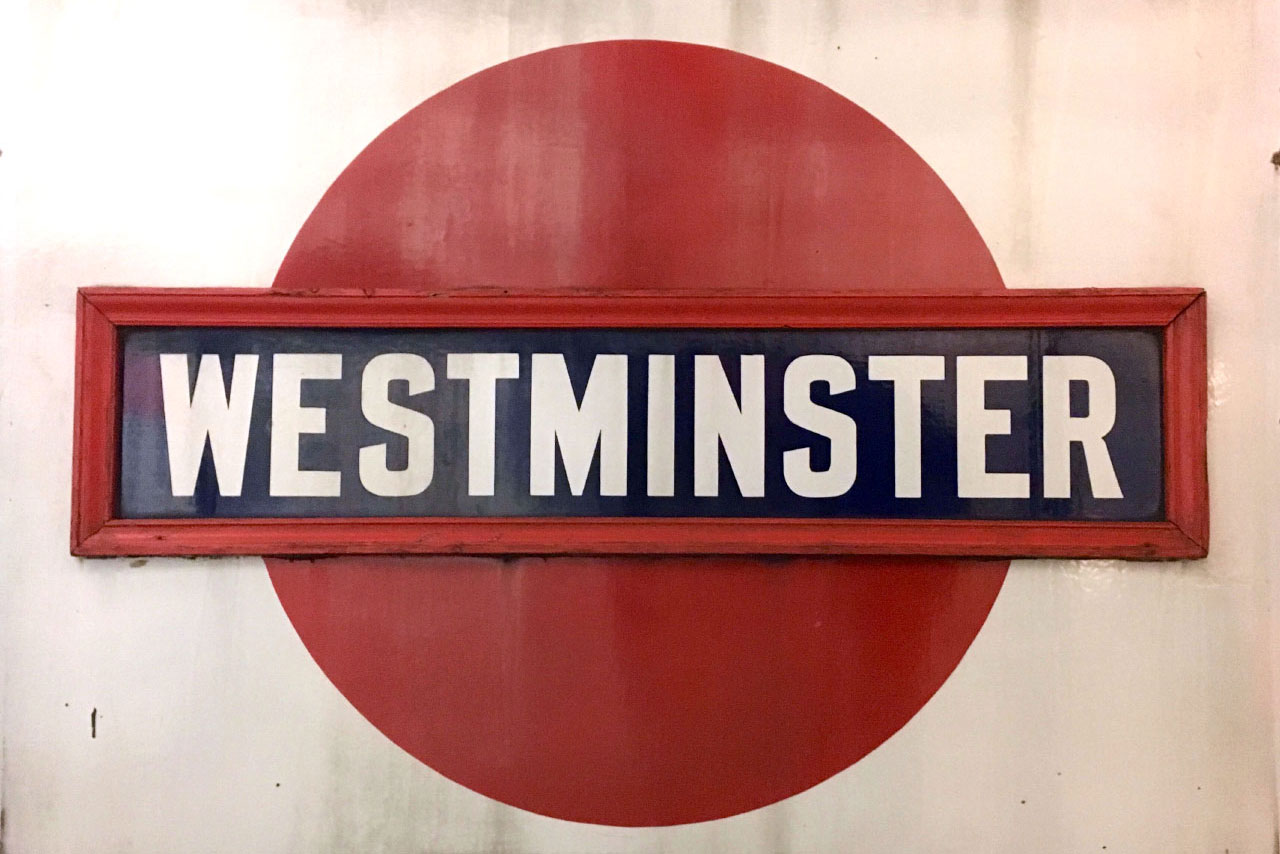
The depot houses a selection of retired tube trains, buses, trams, trolleybuses; and a densely packed mezzanine full of an incredible selection of old signs.

It’s an amazing treasure trove.

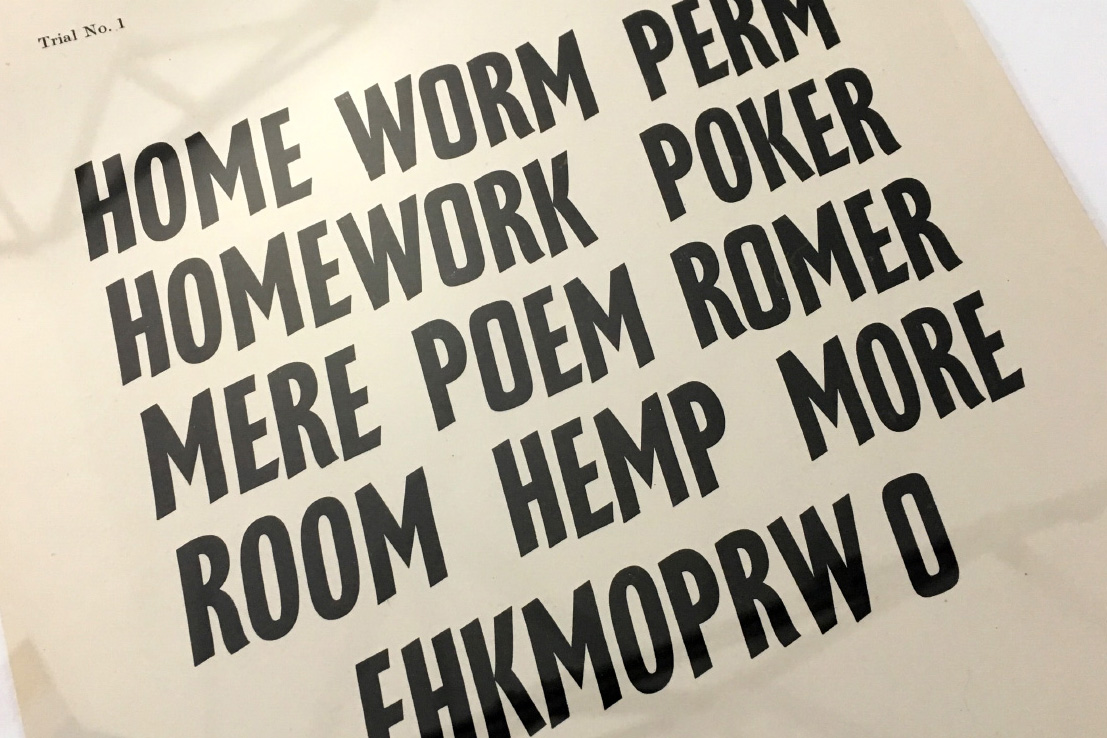
And there’s a host of other wonders too. Back on the ground floor there’s a cabinet of woodblock letters, featuring various versions of the Johnston typeface designed  in 1917 by calligrapher Edward Johnston (who actually lived not so far away from Acton, in Chiswick). This was the typeface used throughout the London Underground, and still in use today (in the slightly modified form of New Johnston).

There are some bits of metal type lying around too:

There’s also a model of Strand Station, a now defunct station which you can occasionally take tours around.

There are also examples of the logo designed for the Victoria Line:

and some lovely old ticket machines:

How binary are those? Put your money in, get a ticket. Or don’t put any money in, push a button, and get an Authority to Travel. Brilliant.

Fantastic stuff.

If you missed it this weekend, they’re having a series of guided tours throughout the year.

If you’d like to find out more about the London Underground’s design history, then you should really get yourself a copy of Mark Ovenden’s truly marvellous book London Underground By Design.

Poster Art 150

We dropped in to the London Transport Museum over the weekend to check out their truly fantastic new show, Poster Art 150.

Put on to celebrate the 150th birthday of the London Underground, the densely packed show is a collection of 150 of the best posters produced for the tube. It features a stack of brilliant designs from the big names in poster design, including Abram Games, Edward McKnight Kauffer, Frederick Charles Herrick, Tom Eckersley, Edward Bawden, Fougasse (above); as well as a few fine artists, including Man Ray and Howard Hodgkin.

The show is split into six thematic areas, which neatly sidesteps the possible problem that might have occurred had the exhibition been chronological – namely that the more recent designs just aren’t as good. Partly this is due to the rose-tinted nature of nostalgia, but it’s not just that – the earlier designs have an energy, simplicity and wit that seems to have faded away from most of the contemporary designs we see now on the tube. Hopefully this show might serve as an inspiration though, both to the commissioners at the tube, and also to designers.

And you know, it’s interesting to stop there and linger on that word ‘designers’.

It feels like most of the contemporary commissions on the underground are given over to fine artists rather than designers. Witness the Olympic and Paralympic Posters for London 2012, Mark Wallinger’s Labyrinth, and The Roundel: 100 Artists Remake a London icon – all commissioned through the Art on the Underground programme. Where are the commissions for designers? Surely a show like this demonstrates just how brilliant a tradition of design London Transport has – it’d be great to see them embracing that by commissioning more contemporary designers, rather than just fine artists.

Anyway, here are some of our picks from the exhibition:

‘A train every 90 seconds’, the first poster Abram Games designed for London Underground, in 1937.

‘Behind the seen’, one half of a pair poster by James Fitton from 1948.

‘The lure of the Underground’, by Alfred Leete (the chap behind the Britons: Lord Kitchener Wants You poster) from 1927. This is a glorious poster – a fantastic economy of line, with wonderful characterisation, as you can see in the detail below:

Austin Cooper’s poster advertising the V&A’s first major poster show in 1931, and depicting Mercury, the winged messenger of the gods.

One of the highlights of the show is the fantastic array of different and frequently bonkers typographic styles. Here are some lovely ligatures from Frederick Charles Herrick’s ‘The lap of luxury’ poster from 1925:

And two Os getting up close and personal in Charles Paine’s ‘Boat Race’ poster from 1921:

And Alan Rogers’ lovely styling of the word Underground from his 1930 ‘Speed Underground’ poster:

Tasty stuff.

‘For the Zoo’, from 1933, by Maurice A. Miles, one of many posters for London Zoo featured in the show.

‘Away from it all’ by M.E.M. Law in 1932 – has a tube train ever looked so dynamic?

And finally, ‘Cup final’ by Eric George Fraser in 1928, which puts you right in the heart of the action.

The show runs until 27 October, and is really outstanding – do get along if you can.

God’s Own Junkyard

We nipped into Chris Bracey’s God’s Own Junkyard in Soho yesterday – what a treasure trove!

Bracey creates neon signage for fashion and film, and the exhibition / pop-up shop collects together a stunning mix of his work as well as some found signs, old movie props, and other bits and bobs. He started making signs in Soho back in the 70s (his work feels entirely at home on Beak Street) and he’s since worked with the likes of David Lachapelle and Martin Creed, Tim Burton and Stanley Kubrick. Not a bad client list.

God’s Own Junkyard is at Circus of Soho, 47 Beak St, London W1 until the end of January.

Revamped

Sorry, we know we’ve been blithering on about Hoxton Street Monster Supplies a lot, but we’ve just been doing a heck of a lot of stuff with them lately.

Since there’s been such a lot of new stuff going on inside, we thought it would be a good time to refresh the outside too.

So we commissioned traditional signwriter Nick Garrett (and his partner Mat) to completely revamp the shopfront. We gave Nick a carefully set layout of all the text, and he tweaked and nudged it to make it appropriate for the front of a shop.

They then marked up the facia with a chalk trace down, and set to work.

Nick used a bespoke colour mix of signwriting enamel for the lettering.

Mat, getting busy with the Ministry of Stories logo.

That’s rather a lovely Q isn’t it?

The panels beneath the windows and on the doors detail all the products the shop sells.

Particular respect to Mat for the many many hours of care and attention he lavished on the Official Notice on the shop’s door.

Lovely stuff.

Letterpress: something to say

Mid-October already? Ay caramba. How did that happen? The days, weeks, and months are just flying past…

Anyhoo, the folks at the wonderful St Bride Library have been in touch to flag up their upcoming event Letterpress: Something to say.

It’s a one-day conference “exploring letterpress as a means for delivering real content, be that a set of sharply thought-through design intentions; a re-imagining of the possibilities of the inky process itself; an analogue springboard to new digital visuals and environments; or a reconnection with the power of a simple press to communicate ideas.”

Confirmed speakers include: Anthony Burrill, Catherine Dixon, Ian Gabb (RCA), Thomas Gravemaker, Dylan Kendle (Tomato), Peter Nencini, and L’automatica (Barcelona).

The conference is on Friday 9 November, from 10am until 6pm. Tickets here.

Central Saint Martins Graphics Summer School

Each year Central Saint Martins runs a Graphics Summer School, which gives students of varied abilities and experience the chance to try their hand at four disciplines: typography, illustration, photography, and advertising.

Alistair tutors the typography section of the course, and this year set the students the task of designing their own London 2012 Olympic typeface. (The actual London 2012 typeface, designed by Gareth Hague at Alias, has of course been the subject of a fair amount of debate. You can read more about it on the Alias blog. And this Designboom post is a comprehensive look at all the visual elements of the 2012 branding.)

Many, if not most, of the students had no prior experience of type design, but their responses were brilliantly imaginative and thoughtful. Here are just some of the responses:

Track, by Patricia Piturlea


London Olympics by Adriana Caneva


Heroes by Bryony Dewson


Muscly by Pablo Andreu


Running by Anarita Galati, using a fantastically detailed running track.


Light Graffiti by Thomas Rush, using LEDs attached to a tennis racket.


Strawball by Anna Dushenko, made from drinking straws.

Lovely stuff. The students were also given a short introduction to letterpress by the wonderful Helen Ingham from Hi-Artz Press, and produced a group print with woodblock letters.

Page 1: Great Expectations

We’ve been dipping in and out of GraphicDesign&’s new publication Page 1: Great Expectations over the last couple of days, and it’s a mighty interesting read.

GraphicDesign& is a collaborative project from Lucienne Roberts and Rebecca Wright, which is aiming create publications which make connections between graphic designers and other subject areas. (We’d perhaps suggest that that’s an inherent part of graphic design – it’s what we do every day – connect with other disciplines to help communicate their messages.)

Page 1 is their first book, and it’s really interesting. The brief they sent out to 70 designers (mainly established names, but a few students too) was to take the first page of Charles Dickens’ Great Expectations, and lay it out however they saw fit, within the paramaters of a standard A format paperback, 110mm x 178mm.

In the final book, each designer is given a couple of spreads – one with their name and their design, and then another with the rationale for their design, and the specifics of typefaces and sizes.

This layout works really well – rather than just being a gallery space for a bunch of designs, we get the chance to listen to the designers explaining the thoughts and ideas behind those designs. Some of the designers might perhaps be accused of taking themselves just a tad too seriously, but in general there’s a pleasing breadth of responses, from the very dry to the very experimental.

Our studio partner Paul Finn was one of the designers included – here’s his page:

And here are a few others:

Great stuff. You can buy the book here.

Buchstaben Museum Berlin

We were over in Berlin this weekend, and took the chance to visit the lovely Buchstaben Museum (Museum of Letters) there.

The small museum, housed on the first floor of a shopping centre, is a fantastic archive of signage and lettering. It’s only open for a few hours each week (1pm to 3pm Thursday to Saturday), but it’s definitely worth a trip if you’re in the city. Here are a few photos of the bits we saw.

Letterpress workshops

‘With twenty-six soldiers of lead, I will conquer the world’ – a rather bold and beautiful statement we came across on a print from the Gregynog Press a few years back.

The soldiers of lead of course are the pieces of metal type used in letterpress printing. Movable metal type was invented by Johannes Gutenburg around 1450, and it’s been with us in one form or another ever since. Phototypesetting knocked it for six around the middle of the last century, and then desktop publishing on the Mac and PC did the same again from the 1980s onwards.

While digital type has a flexibility and speed that old Johannes could only have dreamt of, the physical reality of woodblock letters and metal type can’t be beaten. It forces you to think in a different way, to work creatively with the physical parameters of the type. And perhaps more importantly, it’s just a huge pleasure to be working with with bits of type rather than bytes of information. It even smells good.

With that in mind, we’ve been looking into the various letterpress courses that are available in London at the moment, and we thought we’d share a few of them with you here:

New North Press, just off Hoxton Square, is running a series of one and two day introductory workshops over the next couple of months.

The godfather of letterpress in the UK, Alan Kitching, still has a few places on his two-day courses at the Typography Workshop. Our studio buddy David Pearson went on one of these, and had many fine words to say about it.

Over at the St Bride Foundation, just off Fleet Street, they’re running a variety of short courses for all levels of experience.

With all that to choose from, soon we’ll all be conquering worlds…

UPDATE – David and Elizabeth at Counterpress got in touch to recommend Mr Smith’s Letterpress Workshop in Kennington. Thanks folks! If you have any recommendations of your own, drop them in the comments section below.