Blog

Archived posts: Uncategorized

Hoxton Street Monster Supplies: now online

Ever since it opened its doors a year ago, customers have been clamouring for an online store for Hoxton Street Monster Supplies. And now, thanks to the brilliant work of a team of hugely talented volunteers, the online shop is alive.

And just in time, as we’ve recently created a whole new range of products for the shop*:

These tins of fear are perfect as a top-up for any monster who’s not feeling quite as scary as they should. As well as a batch of fear, each tin also contains an exclusive short story by a top children’s author, so they make rather good presents for kids.

The Night Sweats features a tale by Andy Stanton; The Chills a story by Jeremy Strong; Alarm has a story by Meg Rosoff; the Night Terrors tale is by Eoin Colfer; and Creeping Dread features a story by Charlie Higson.

The boxes of Cubed Earwax are ‘A true delight at any monster’s table’; but we’re more partial to the bars of Impacted Earwax.

The shop is also selling these jars of Daylight – perfect for vampires suffering from Seasonal Affective Disorder (SAD). You simply leave them out in the light during the day, and as soon as dusk falls, they light up. They also come in a Moonlight version for werewolves who don’t want to wait around all month for a full moon:

And just in case you have a really sweet tooth (or fang) there are a couple of new jars of sweets:

You can also pick up some of the original range of products, including T-shirts, Zombie Fresh Mints, Fang Floss, and of course, some of the books written by the kids at the Ministry of Stories, including the new Awfully Bad Guide to Monster Housekeeping.

The site was designed by Gavin and Jason Fox, built by Simon Pearson, project managed by Chris Meachin, user experienced by Mike Towber; and art directed by We Made This.

*Not all the products are available from the online store; and shipping is only available for UK addresses at the time of writing.

Max Fraser on Freedom

~ While Alistair is away cycling the length of Great Britain, we’ve invited twenty disgustingly talented people to each write a post for our blog. Today’s post is from the mighty fine Max Fraser: design author, journalist and curator. ~

I’m writing this post only a few days after completing a new book and sending it to the printer. Without going into too much detail, the publication is most certainly a celebration of visual culture with a particular focus on contemporary product, interiors and architecture. [Max is being very coy here - it's the 2012 edition of the brilliant London Design Guide - an essential guide to the London design scene - Alistair]

Assessing manmade environments is at the very core of what I do professionally and is inevitably part of my life when I’m ‘off-duty’ too.

Sitting here, enjoying my first day off for as long as I can remember, my desire to write about even more visual culture is rather unappealing. I hope you understand. Instead, I’d prefer to turn my attentions to the great cycling feat that Alistair is enduring and which he is only days away from completing.

Looking at the map of his route, I feel envious as to the wonderful freedom he must be enjoying. And it is freedom on many different levels: freedom of the open road; freedom from familiar daily routine; freedom to become lost in thought; and, yes, freedom from visual culture.

The latter, of course, is not strictly true. Alistair will have experienced an eye-opening snapshot of British life, in itself a maelstrom of visual culture which he is not purposefully seeking out but is experiencing as part of his route through the everyday fabric of this country. Along his journey from A to B, he cannot avoid signs of progression as well as neglect – everything from the traditional to the modern, the quaint and the brash, the beautiful and the ugly. The excitement is derived from not knowing which order they will come in.

Indeed, this visual stimuli is exactly the refreshing influence that everyone needs from time to time. Removing yourself from the world of ‘considered’ culture to one of ‘real’ life is the most valuable collateral for anyone contributing to our complex layering of society. Such a journey as Alistair’s provides a healthy dose of relevance and context which he can use, consciously or not, in his ongoing contribution to our visual culture.

The best inspiration can be found when you’re not looking for it, a belief close to the practice of the late graphic designer Alan Fletcher. As Alistair is tearing through the British countryside, Fletcher’s exhibition is on show at the cultural hotspot of Kemistry Gallery in London, titled The Art of Looking Sideways.

I am quite sure that the legendary Fletcher would approve of Alistair’s bicycle adventure although, for your own safety Alistair, keep at least one eye on the road!


~ Alistair is raising money for Cancer Research UK during his ride – please wander over to his Just Giving page and donate a little cash. ~

Hasta luego

Right, summer holiday time. Flip flops – check. Camera – check. Books – check.

We’ll see you in a week or so. Until then – besos.

Print matters

The students from the BA Graphic Design course at Central Saint Martins have been in touch to ask us to highlight a campaign they’re running to save their screen-printing and book-binding facilities.

In September, the entire college is moving from its various existing campuses to a single campus in Kings Cross, which is potentially very exciting, allowing for a lot more cross-course collaboration. As part of that move however, the college administration has decided that print-making and book-binding, which have always been a core part of the course, are no longer integral to a graphic design degree, and it’s relocating them to a separate site in Archway.

The students are determined to do all they can to stop that happening, and rightly so. Hands-on printing experience is hugely valuable, as is the fact of having a physical space where students can see each others’ work. Making it any more difficult for students to learn the physical side of graphic design is extremely shorts-sighted.

Find out more about the issue on their Off Sight Tumblr blog, and this post on the Eye blog. And while you’re at it, you can sign their petition.

A bit of Marshall McLuhan for a Friday afternoon


Central Saint Martins Graphics student Oliver Mayes dropped by the studio yesterday to show us his recent work, all of which was pretty great, but we particularly liked this short motion graphics piece.


Careful there, you might want to turn your sound down a bit first…

Great Joy

Our hearty congratulations to Max Fraser on organising his fantastic Joy of Living exhibition at Somerset House, which raised £25,000 for Maggies Cancer Caring Centres. Now that all the works have sold, the list of who created each piece has gone live on the site.

We were lucky enough to be asked to create a piece ourselves (above). We wanted to do something typographic, so started playing around with text and letterforms on the graph paper, and found ourselves creating a monospaced typeface, its forms and dimensions entirely determined by the page size and the grid. Once we’d shaped out the entire alphabet we noticed that the J, O and Y had lined up in a column, which seemed too happy an accident to ignore.

We also found a bit of time to use the fantastic FontSruct online tool to create a fully functional version of the typeface, which we’ve called Sector 7 (below).

All the Joy of Living works are now sold, but Max is still collecting donations at this Just Giving page – it’s a fantastic cause, so if you have a moment, go donate.

The Beauty of Books: Paperback Writer

Just in case anyone missed it – our studio partner David Pearson made an appearance on the final episode of BBC4′s The Beauty of Books (that’s him doing some rather fine hand-modelling in the picture above). The show looks at the art of cover design, with particular reference to George Orwell’s Nineteen Eighty-Four and Anthony Burgess’s A Clockwork Orange; as well as glancing at how the e-book reader is affecting the publishing industry.

It’s a great show, well worth checking out while it’s still available.

Artomatic’s back

We got this little flyer in the post this morning, announcing the return of Artomatic, which is a bit of blast from the recent design past.

For graphic designers in London, Artomatic used to be a bit of a mecca. Originally set up in 1983 as a screenprinting studio, it morphed gradually into a print consultancy, sitting between designers and printers to help make really tricky print jobs happen. Artomatic+ opened up on Great Sutton Street in 1999 (next door to Vince Frost’s studio), in the form of a shop, gallery, print library and offices, as a place where designers could go to thumb through shelves of print samples.

Artomatic worked on some seminal design projects, including Mark Farrow’s packaging for Spiritualized’s Ladies And Gentlemen We Are Floating in Space, and Tom Hingston’s beautiful heat sensitive packaging for Massive Attack’s Singles Collection.

The Artomatic team went their separate ways in 2003. Daniel Mason’s since written a fair few books about print design and production, and Robert Gaddie set up his own print consultancy, Crayfish Creative. It’s Tim Milne though, one of the founders of Artomatic, who is resurrecting it now, after having spent some time in the USA, and setting up the Direct Mail project Matter.

The new website is fascinating as a brilliantly frank history of what went wrong the first time, as well a great showcase for the incredible work that Artomatic was involved with. Well worth a look – particularly for the range of ilikeprinting limited edition prints on offer from the original Artomatic days.

LDF10: Designers Block

We made our way across to the Bargehouse at Oxo Tower Wharf yesterday to check out this year’s Designers Block, and figured we’d treat you to a few of our favourite finds.

Just above is Mike Kann’s Muybridge Chair – Gallop 2, part of a series of chairs: “designed to create an animation of movement in a physical object. This range is based on a set of images of a horse walking captured through the pioneering photography/video work of Eadweard Muybridge.” Brilliant.

Sticking with chairs, we loved Hendzel and Hunt’s Made in Peckham range of furniture (below), made from reclaimed and waste materials from the streets and yards of SE15, and without the use of metal fixings, just handmade wooden dowels. Lovely stuff.

As you can see above, the boys from Hendzel and Hunt had bought their dog with them to do some PR; but the gang from Lazerian had made their own dog, in the form of Gerald (below), who comes in various shapes and sizes. We’d love a Gerald for the studio…

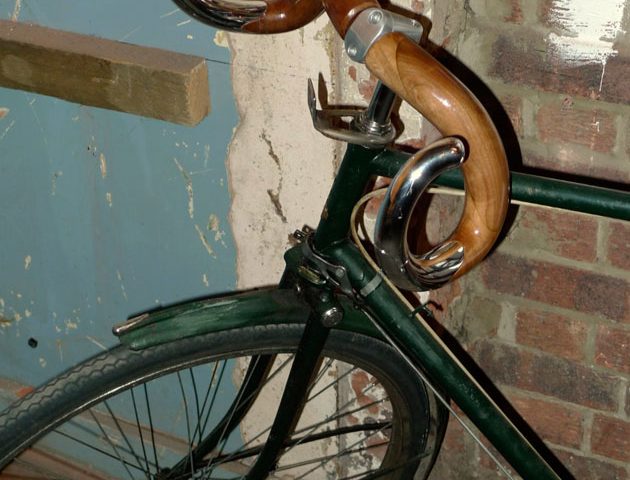
And sticking with the animal theme, Sung Kug Kim was showcasing his beautiful Bi-King handlebars:

Designers Block is on at the Oxo Tower Bargehouse until Sunday 26 September.

Great Ideas V

Well heck, it seems like only yesterday we were sitting down to design the cover for Why I Write for the first Great Ideas Series, but it was actually five years ago…

The latest series is just about to be published, and we were asked to design a cover for a collection of essays by Argentine writer Jorge Luis Borges, under the title The Perpetual Race of Achilles and the Tortoise (above). The essays discuss, amongst other things, the existence of hell and the philosophy of contradictions.

We did a bit of research into Borges’ writings, and learnt that he’d been one of the founding contributors to the Argentine literary journal Sur, which was published regularly from 1931 until around 1966.

The covers of the earlier issues of the magazine are a single colour decorated with a just a white arrow, the issue number and the masthead, while the later issues also feature a full list of contributors.

The magazine has a very distinctive (and typographically bonkers) masthead, and fortunately the name ‘Sur’ isn’t a million miles from the name ‘Borges’, so basing our design on it felt like a rather tasty solution.

We managed to pick up a couple of copies of the magazine from Lirolay Books in the USA; and set to work drawing the new title. We also scanned in a blank page of the magazine to use as a tonal background for the cover, emphasising the ephemeral nature of the source.

The rest of the covers, as with all the previous series, are principally designed by David Pearson, with additional designs by Phil Baines and Catherine Dixon.

We’re entirely biased, but we think they’re one of the best sets yet. David has uploaded most of the covers to this Great Ideas Volume V Flickr set, and will be posting the final few imminently.