Blog

Archived posts: Product

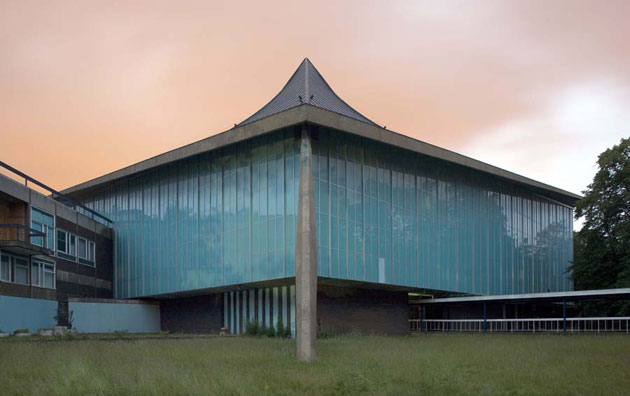
The New Design Museum

So, as you may well know, the Design Museum in London is planning to move from its current home in Shad Thames right across town, and into the former Commonwealth Institute building, at “the wrong end of a Kensington shopping street” as architecture critic Stephen Bayley has previously put it.


The move won’t happen until 2014, but in the meantime, the museum’s latest newsletter has asked the design community to give some feedback on their proposals to the local council, the Royal Borough of Kensington and Chelsea. Unfortunately, the planning department has hosted the files in a way that really doesn’t invite much feedback, but it might be worth wading through them.

High Street Kensington does seem like a slightly strange place for the Design Museum to move to – it’s not really a part of town you immediately think of when you think about design – and that’s despite the presence of the Royal College of Art, and slightly further away the V&A. But the building is quite groovy, and they’ve got John Pawson on-board for the remodelling, so there’ll be stacks of clean white spaces to enjoy. And the plans do involve far more exhibition space, as well as lots more education space, which can only be a good thing.

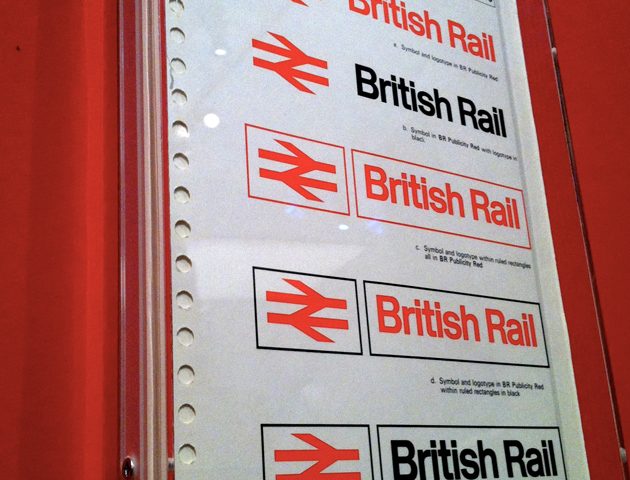
And heck, how great would it be if there was space for a permanent collection of British graphic design?

Clare Skeats on Foundation

~ While Alistair is away cycling the length of Great Britain, we’ve invited twenty disgustingly talented people to each write a post for our blog. Today’s post is from the marvellous Clare Skeats – an incredible book designer, and brilliant design teacher. ~

Since 2009, I’ve been lucky enough to work as an Associate Lecturer on the Central Saint Martins Foundation Course in Art & Design. This involves leaving my stress-inducing desk for a day each week and immersing myself in the creative educations of 30 or so young people. For those of you who don’t know, Foundation is the year of study (usually undertaken around age 19) in which students experience learning in every art and design discipline, before deciding what to specialise in for a BA. Its main objective is as much to de-programme school conditioning, as it is to inform, provoke, equip and inspire.

I often find myself having to explain to people who have not come through an art or design education, what, exactly, the point of Foundation is. A frequently occurring question is ‘why do they need to do that?’. Fair point. Why should it take a year longer to graduate in jewellery design than say, marine biology? Doubts aside, almost everyone I speak to who has done this year of study (myself included), cite it as one of the most vital, pivotal and enjoyable years of their education. But it’s a year that is quickly overlooked – it’s the support act for the more talked-about BA. It’s also no secret that some Foundation courses are facing closure due to funding. So I wanted to use my 15 minutes in the We Made This spotlight to celebrate this stage in an artist’s or designer’s development and explain why I think it’s so special.

One of the first things we have to do on the course is to get students over their fears – fears of a new place (often a new country), new people, a new way of working – and one excellent (if unlikely) way of doing this is to get them to do something where we deny them an element or two of their control.

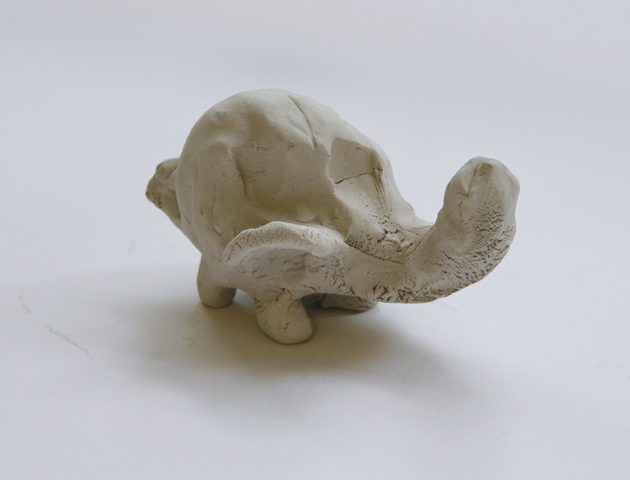
These two objects (above and top) are the results of an exercise where the students were asked to sculpt an elephant from clay, in 30 seconds with their hands behind their backs. When restrictions such as these are imposed, it’s impossible not to produce something with this much honesty and charm – it’s such a pure and uninhibited response to a creative brief. The laughter that ensues when these roughly-hewn grey lumps are offered up, represents a significant threshold of the first few days experience.

A major requirement of Foundation students is for them to keep a sketchbook. A Foundation sketchbook is instantly recognisable by its bulging form. It is the fertile receptacle of ideas, inspiration, tests, mistakes, frustrations and triumphs.

I love the sense of urgency and spontaneity that comes across in this spread by Sing Yu Chan (progressing to BA Fashion Design Technology (Menswear) at London College of Fashion); the instant visual connection he makes between the reference on the left and its hasty translation to cardboard and string weaving samples in the centre.

This impressive escalation of an idea (below), which grew from an exercise in folding a sheet of paper, is another example of sketchbook brilliance from Yang Yang (progressing to BA Costume Design at Wimbledon College of Art). It demonstrates so succinctly how a sketchbook can give a platform to the most ambitious (if ephemeral) creative plans.

One of the things I get most excited about with teaching at this level, is the scale of ideas that can be suggested through the most humble of materials.

This rather unassuming-looking object by Florence Lam (progressing to BA Fine Art at Central Saint Martins) was produced in response to a visit to a recent exhibition of South African photography at the V&A. The black line (which is intended to be continuous – encircling the floor, walls and ceiling of the gallery space), is intended as a comment on Apartheid. I was surprised by my reaction to this piece when I saw it – yes it’s just some bits of foam board and black paint – but peering through the miniature doorway, it was so easy to imagine oneself in this impossibly cavernous and divided space. The scale is so perfectly judged and the whole piece is so much more than the sum of its parts – it’s an unexpectedly powerful expression of an idea from very limited means.

Another masterful deployment of basic materials can be found in these wonderful, organic, pod-like objects from Yao Wang (also progressing to BA Fine Art at Central Saint Martins). Who knew that a balloon, a bucket, Plaster of Paris and physics could produce such beautiful forms?

When I was speaking to Yao, shortly after her prototype stage, she had an urge to remove the shreds of balloon – an understandable drive to ‘finish’ the project as she’d first intended. But we decided that the unforeseen beauty of the red latex stretched over the smooth plaster was way too interesting and so ‘finishing’ the project in its most conventional sense became completely unimportant. Whilst we try to instil a disciplined approach with a focus on pragmatic problem solving – it is these unexpectedly brilliant outcomes and deviations that keep the students open to possibilities and reminds us as tutors not to be too rigid.

Allowing students the flexibility to bend rules is always a difficult one to judge. On the one hand, we put time and effort into writing a brief and we want the students to learn to respond to set questions with rigour and focus – but on the other, we run the risk of sucking the life out of a project if we’re too dogmatic. The following film piece by Venice Wanakornkul (progressing to BA Fine Art at Central Saint Martins), is the most perfect and playful example of why we need to allow students to bend rules. When faced with a brief to produce a piece of work in response to a culture (chosen from artefacts within the V&A), Venice opted to focus her outcome on the culture of museums. Hm…. not quite what we’d asked for – but the idea Venice had, subverted the brief in such a delightful way, we simply had to allow her to pursue it. Here is her film:

I never cease to be surprised and impressed by how sophisticated some students are in their thinking at this stage – how they utilise research and process information. The images here are from the sketchbook of Michael Ng (progressing to BA Product Design at Central Saint Martins) and they are such an impressive demonstration of lateral thinking in response to the Culture project described above.

Having made some initial drawings of these Japanese artefacts in the V&A (traditional cases for holding small objects), Michael undertakes further internet research, before leaping to references of inter-locking pens, stacking crates and coffee cups, then back to Samurai warrior helmets for a further re-think on the form, before producing this prototype to a more geometric design. Michael went on to develop the design even further, incorporating lights, (yes lights!), but I think even up to this stage of his project, his sense of investigation and spirit of ‘how can I make this better?’ is so wonderfully clear to see.

The experience of teaching on Foundation has lead me to re-appraise my own working methods and to be more open to wider influences. It has made me reconnect to my own experiences on Foundation and reminds me of a time when everything seemed new and different – sometimes uncomfortably so. But most importantly, it puts me in an environment once a week, where industry cynicism makes no unwelcome intrusions and anything can be possible.

With thanks to the staff and students on the Central Saint Martins Foundation Plus course, 2011.

[The opinions expressed above are those of Clare Skeats and do not necessarily reflect those of Central Saint Martins.]


~ Alistair is raising money for Cancer Research UK during his ride – please wander over to his Just Giving page and donate a little cash. ~

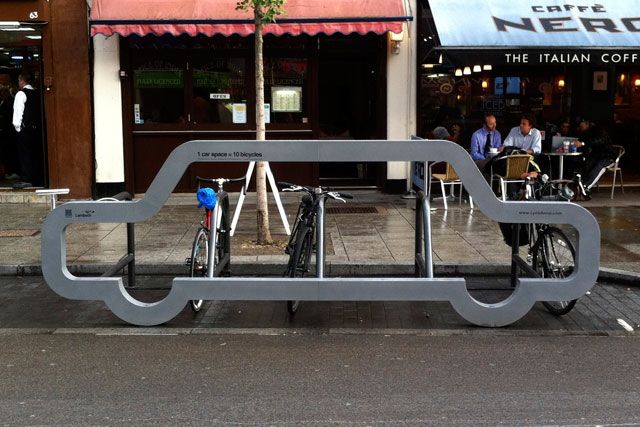
1 car space = 10 bicycles

How cool is this? Spotted on The Cut at Waterloo, it’s one of Cyclehoop’s Car Bike Racks, installed by Lambeth Council.

They’re designed to be installed either temporarily or permanently, and convert one car parking space into ten bike parking spaces. It’s even got a free pump integrated into the frame, so you can keep your tyres nice and firm.

It’s a cracking piece of product design – functional, simple, eye-catching, elegant, witty and thought-provoking. Not bad for a bike rack (but pretty much what you’d expect from the guys who created the brilliant Cyclehoop). We’d love to see loads more of these about town.

24 Hour Inclusive Design Challenge

This looks interesting: the 24 Hour Inclusive Design Challenge.

Run by the Helen Hamlyn Centre for Design at the Royal College of Art, as part of their Include 2011 conference, the challenge aims to inspire designers about inclusive design by getting them to work on a 24hr brief. (As a by-product, there’s also a fair bit of publicity about the project, so it can be a good way to boost your profile, and also do a spot of networking.)

The challenge is open to designers of all disciplines, as companies or as designers, and they tell us that they’re particularly keen to get freelancers involved. The challenge takes place on 18 & 19 April, and the deadline for entering has just been extended until 5pm on Thursday 31 March.

Artomatic’s back

We got this little flyer in the post this morning, announcing the return of Artomatic, which is a bit of blast from the recent design past.

For graphic designers in London, Artomatic used to be a bit of a mecca. Originally set up in 1983 as a screenprinting studio, it morphed gradually into a print consultancy, sitting between designers and printers to help make really tricky print jobs happen. Artomatic+ opened up on Great Sutton Street in 1999 (next door to Vince Frost’s studio), in the form of a shop, gallery, print library and offices, as a place where designers could go to thumb through shelves of print samples.

Artomatic worked on some seminal design projects, including Mark Farrow’s packaging for Spiritualized’s Ladies And Gentlemen We Are Floating in Space, and Tom Hingston’s beautiful heat sensitive packaging for Massive Attack’s Singles Collection.

The Artomatic team went their separate ways in 2003. Daniel Mason’s since written a fair few books about print design and production, and Robert Gaddie set up his own print consultancy, Crayfish Creative. It’s Tim Milne though, one of the founders of Artomatic, who is resurrecting it now, after having spent some time in the USA, and setting up the Direct Mail project Matter.

The new website is fascinating as a brilliantly frank history of what went wrong the first time, as well a great showcase for the incredible work that Artomatic was involved with. Well worth a look – particularly for the range of ilikeprinting limited edition prints on offer from the original Artomatic days.

Art Car Boot Fair at The Dock

Gavinturk

Ah, so this is good – on Saturday the folks at the Art Car Boot Fair will be selling their wares at their 'Bootique' at The Dock, the 'emporium of creative talent' curated by Tom Dixon over at Portobello Dock.

"The Art Car Bootique will distill the Art Car Boot Fair’s winning combination of fine art art and high end frivolity into a ‘best of the boot fair’ event … all manner of artworks, artwares and services direct from artworld luminaries and emerging talents including Sir Peter Blake, Nick Reynolds, Ian Monroe, Pure Evil, Gavin Turk, Pretty Taxing, the House of Fairytales, Scrawl Collective and Stuart Semple. Fine art, street art, limited edition prints, cool sculptures, art for kids and live while-you-wait portrait painting plus lots of arty entertainments."

The bootique will be open on Saturday 26 from noon till 6pm (possibly from 10am – the site mentions both times). The Dock is open from 10am-6pm daily this week, until 8pm today, and until 4pm on Sunday.

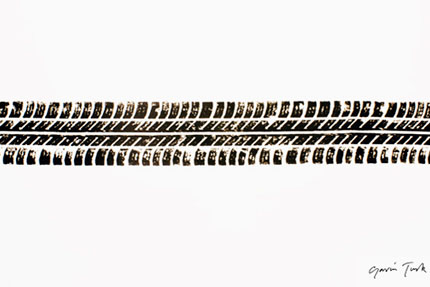
Image top: Tyre Print, 2008, by Gavin Turk.

Design for life

Design for life

So, who caught the opening episode of BBC2's Design for Life just now?

The show is the design version of The Apprentice, with Philippe Starck hamming it up as a gallic  Sir Allan. 

Starck

In the first episode we were introduced to the group of 12 British wannabe product designers*, who applied to the the show in the hope of winning a six month placement at Starck's design group. They were whisked off to Paris, where their first challenge was to scour a supermarket in search of examples of good and bad product design.

Starck held up an army jeep as an example of really great design, "its the only vehicle which have the elegance of intelligence, because it's not driven by marketing, it's driven by function". Which is fair enough, but more than a tad ironic coming from the man whose most famous product is the almost entirely non-functional Juicy Salif lemon-squeezer (below). He went on to lament the fact that designers are churning out too many unnecessary products… a case of the designer pot calling the kettle charcoal-grey?

Juicy-salif

Still, it's always good to see design getting an airing during prime-time. And Starck is at least entertaining. But what did you make of the programme? Answers on an inflatable postcard, or chuck us a comment just below.

More info on the show here, and it runs for another five episodes, and you can catch it on iPlayer too.

*What's the right group noun for that? A CAD of designers? A sketch of designers?)

Wireframe Lamborghini

Lamborghini

How yummy is this?

A life-size wireframe model of a Lamborghini Countach. In flouro orange.

We caught sight of it on Saturday over at The Classic Car Club on Old St. It's the work of artist Benedict Radcliffe, and you can read more about it on this Jalopnik post.

Vrmmmmmm.

Design Event 08

De08_sheehan

We made our way up to Newcastle last weekend to check out the fantastic Design Event festival, and found some really tasty stuff.

Up first, at the Design Event Mart at BALTIC, was recent graduate Sarah Sheehan's stunningly lovely Lost for Words jewellery collection (above). Each piece featured text from a book, and the books themselves were then lasercut and used as packaging for the pieces. Sarah doesn't have a site up yet, but you can contact her via email.

De08_eelus

Over at Electrik Sheep, Eelus had created a fantastically dark show, and we particularly loved the triptych of Splasher, Swinger and Skipper (above). The show stays up until 1 November.

De08_lightenup

Meanwhile, the [re]design gang had moved their Lighten Up show from the relatively restrained surroundings of London's 100% Design to the incredible space inside the Tyne Bridge's North Tower, and the show looked fantastic there.

For more info, check out our full preview, take a look at Alistair's Design Event Flickr set, or heck, check out the official Design Event Flickr sets.

Oh, and a big thank you to Beckie and Karen at Design Event; and also to the mercurial Dan Civico for guiding us around the highlights of Newcastle's nightlife.

A design guide to Amsterdam

Amsterdam: Tulips, bikes, canals, dope, prostitutes in windows, lots more bikes. And heck, a wealth of simply fantastic design. 

We nipped over to the capital of the Netherlands this weekend to check out the city's design scene, and particularly to take a gander at Experimentadesign, the Lisbon based design festival that's taking place in Amsterdam for the first time this year. 

The festival kicked off on 18 September, and it runs through until 2 November – a fairly impressive six and a half weeks of design goodness. We checked out a few of the main shows: Droog's Urban Play, The Sunday Adventure Club, and Come to my place

Amsterdam_windowzoo 
Urban Play comes in two parts: the first part is an exhibition that showcases the work of a variety of artists and designers who are injecting a bit of fun back into the city. The selection of artists is great, and we particularly dug the work by Zurich's Windowzoo (above), and Montreal's Roadsworth (more on him in a later post). The show mainly uses short films to present each designer's work, which is good as far as it goes – it would have been brilliant to see more actual examples. But that's a minor grumble about a great show.

Amsterdam_sagmeister

The second part of the exhibition is a series of interventions alongside Amsterdam's IJ Riverfront by twelve designers, including Stefan Sagmeister. Unfortunately, his incredibly beautiful piece, Obesessions make my life worse and my work better, made of 300,000 eurocent coins, got cleaned away within hours of being created, by a rather overzealous local police force (and a distinct lack of clear communication).

Amsterdam_sac

Back in town, the Sunday Adventure Club (above) is a wonderfully playful lo-fi exhibition, showcasing "citizens who through their personal passions have initiated activities in public space", carving out spaces for play in the dense urban landscape. We particularly like the take-away instruction sheets for creating all kinds of fun stuff, from Seed Bombs to Match Rockets.

Meanwhile, Come to my place is a great show that has invited designers from eight cities around the world to create room-sets filled which "exemplify the way in which the global citizen defines their individuality by making a personal choice from the vast resources of the design industry and the shop around the corner". Good stuff.

Away from Experimentadesign, we checked out a bunch of exhibitions and design stores. 

Amsterdam_vankreij

Unfortunately Amsterdam's home for modern art, the Stedelijk Museum, is closed at the moment, having left its temporary digs at the Post CS Building in anticipation of setting up home in its newly renovated original building at the end of 2009. In the meantime they've got a series of temporary shows happening as part of their Stedelijk in the City project (check the site for details); as well as regular shows at the Stedelijk Museum Bureau Amsterdam (SMBA). We checked out the latest show by Marijn Van Kreij, who creates brilliant hand rendered textual pieces (above).

We also stumbled across the Netherlands Media Art Institute, currently hosting a brilliant show Sonic Voices, Rocking Hard which features a variety of artists, film-makers and musicians working at the intersection of art, sound and music. We particularly liked the 3D version of Bjork's fantastic Wanderlust promo (long download but worth it) from Encyclopedia Pictura; and were blown away by Johan Renck's promo for The Knife's Pass This On (below). 

We also checked out a couple of photography shows. Over at the rather wonderful Foam (Fotografiemusuem Amsterdam) there were a selection of shows, including the incredible Hyena & Other Men series (below) from Pieter Hugo, which is running until 2 November. The images have been doing the rounds on the web, but seeing them full size is just incredible. They're stunningly beautiful.

Amsterdam_hugo

Just along the road from Foam you'll find Huis Marseille, Amsterdam's self-proclaimed first photography museum, currently showing Cy Twombly's dry prints (until 23 November).

Of course, it's not just about looking at lovely stuff, it's about taking it home too, and Amsterdam's packed full of delicious design stores.

Amsterdam_droog

We made our way first to the daddy of the bunch, the Droog store, which features a range of limited edition pieces (like the Crystal Virus from Pieke Bergmans, above), as well as a bunch of more affordable but equally imaginative products. 

But, we were far more impressed by the simply wonderful Frozen Fountain, which is just dripping with every manner of design loveliness, including the Zeppelin chandelier from Flos (below). It's our new favourite shop.

Amsterdam_ffountain 
We also loved the Nijhof & Lee bookstore (a bit like the UK's Magma, but with more old books); Wonderwood, which stocks, well, furniture made of wood; and the lovely De Weldaad, which is packed with antiques and "architectural artefacts". They even had a bottle-drying rack (below), just like the one what Duchamp made famous.

Amsterdam_weldaad

For the fashionistas, there's a wealth of second-hand clothing stores, or if you're looking for something a little more contemporary, check out Concrete and SPRMRKT, both achingly hip. 

You can check out all of Alistair's shots from the trip on his Amsterdam Flickr set, and we've put a Google Map with all of this stuff on, and more besides. We used the Time Out Shortlist Amsterdam and also the fabulous guide created by Danielle de Lange at The Style Files.
(And if all that's given you a spot of wanderlust, you can also check out our guides to Paris and Newcastle.)