Blog

Archived posts: Architecture

The New Design Museum

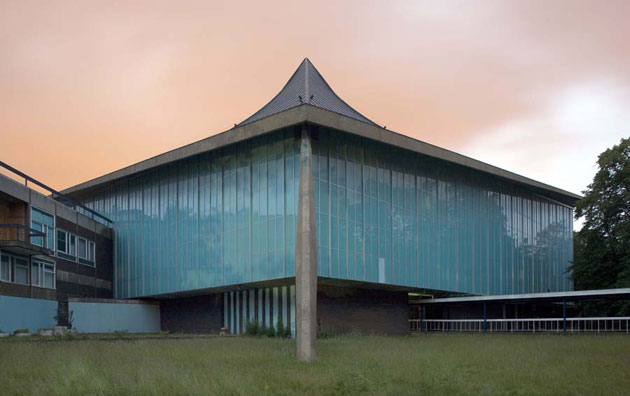
So, as you may well know, the Design Museum in London is planning to move from its current home in Shad Thames right across town, and into the former Commonwealth Institute building, at “the wrong end of a Kensington shopping street” as architecture critic Stephen Bayley has previously put it.


The move won’t happen until 2014, but in the meantime, the museum’s latest newsletter has asked the design community to give some feedback on their proposals to the local council, the Royal Borough of Kensington and Chelsea. Unfortunately, the planning department has hosted the files in a way that really doesn’t invite much feedback, but it might be worth wading through them.

High Street Kensington does seem like a slightly strange place for the Design Museum to move to – it’s not really a part of town you immediately think of when you think about design – and that’s despite the presence of the Royal College of Art, and slightly further away the V&A. But the building is quite groovy, and they’ve got John Pawson on-board for the remodelling, so there’ll be stacks of clean white spaces to enjoy. And the plans do involve far more exhibition space, as well as lots more education space, which can only be a good thing.

And heck, how great would it be if there was space for a permanent collection of British graphic design?

T-Pylon

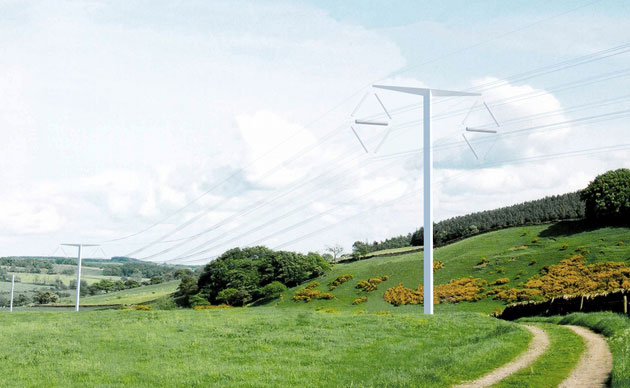
So the folks over at RIBA have announced Danish architecture, engineering and design studio Bystrup as the winner of their competition to redesign the standard British electricity pylon, with their T-Pylon design.

The design was praised by the judges for managing to reduce both the size and height of the pylons, and consequently the amount of materials used in their construction.

It’s not the most radical of the six shortlisted designs (out of the 250 entries), and it’s interesting to read that National Grid, who also sponsored the competition, are going to talk to the studios behind two of the other entries as well – including New Town Studio with their gorgeous Totem design (below).


Serpentine Pavilion 2011

We nipped over to the Serpentine Gallery over the weekend just in time to check out their latest pavilion (we’re a bit late on this one – it’s been up since the beginning of July, and comes down at the end of this week). It’s the 11th in their series of annual commissions, this time by architect Peter Zumthor.

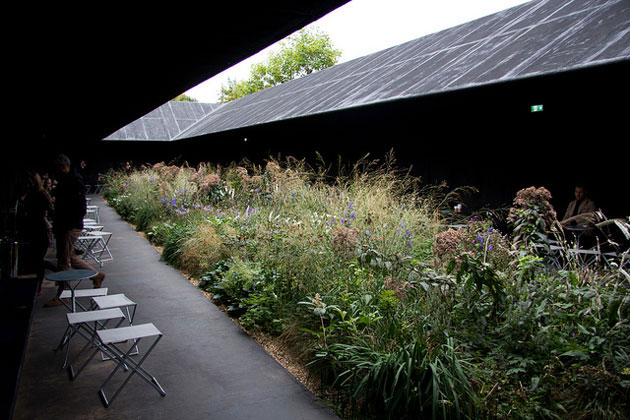
Sometimes the pavilions can be architecturally audacious, but slightly disappointing as an actual experience. Here, that feeling is reversed – the architecture is restrained to the point of absolute minimalism: a simple black box, which frames a garden designed by Piet Oudolf (the chap behind New York’s brilliant High Line).

The black simplicity of the box feels very sombre, almost funereal – although this is slightly offset as you get closer to it, and realise that it has a rough, organic texture.

You walk into a corridor between two walls, which works to separate the internal garden from the outside world, helping to create a quiet, contemplative space. The light within the corridor was very beautiful in itself, with pools of daylight at the doorways:

We liked the fact that the black box playfully references the classic white box we associate with art galleries, and that inside it you find yourself contemplating the sky* and the other visitors as much as the garden. We were there on a dull autumnal day, and we’d love to see it at different times and in different weather conditions.

*In that resepect, it reminded us a great deal of the artist James Turrell’s work.

If you’ve not been, and can squeeze it in, it’s definitely worth a trip – and this weekend the Serpentine is holding a Garden Marathon, the 6th in their marathon series: a two day event with artists, scientists and thinkers exploring all manner of garden related ideas.

Good stuff.

Caroline Roberts on The Elephant and Castle

~ While Alistair is away cycling the length of Great Britain, we’ve invited twenty disgustingly talented people to each write a post for our blog. Today’s post is from one of our neighbours, the wonderful Caroline Roberts, co-editor of Grafik Magazine, and partner at the rather fine Woodbridge & Rees. ~

In an attempt to avoid the sweltering experience of traveling on the Underground I recently changed my journey to work, catching the Thameslink overground train from Elephant and Castle station.

The Elephant and Castle is an area I’ve actively dodged over the years, only stopping off for the odd vist to the now defunct Pizzeria Castello, the Ministry of Sound and LCC. Despite being a mere hop and a skip away from the City and the West End, it’s an area that has steadfastly resisted attempts at gentrification. The fumed filled-dual carriageway that rips through its centre, the confusing dual-roundabouts and dingy, disorientating (not to mention dangerous) walkways that pedestrians are forced down make for a totally depressing urban experience, of which no amount of jaunty murals or garish rebranding can alter.

Going to the station involves walking through the middle of the much maligned shopping centre, something I haven’t done for years. At 9am it’s a decidedly strange experience — there’s weird tinkly piped music and an even weirder collection of very multicultural shops including a Polish restaurant, a South American café, a discount shoe store, a shop selling cheap handbags, a pawn brokers and a very forlorn looking estate agent.

It wasn’t always like this — in the 1930s the area was known as “the Piccadilly of South London”, home to a department store, a shoe factory and several huge cinemas. The area was badly hit during the war and rebuilt in the 1960s to include a ground-breaking new shopping centre. The first ever covered shopping mall in Europe, it had 120 shops and an underground car park, but in true E&C style, due to some wildly inaccurate financial forecasting, the original plans had to be reduced, budgets were slashed, corners were cut and only twenty-nine shops actually opened.

Things have gone steadily downhill ever since. The large swathes of badly designed social housing that surround it and the problems that brought, coupled with lack of investment over the years meant that the shopping centre has been in a slow but pretty much continual decline. It’s hardly a surprise — creating a scheme where traffic is treated with more respect than pedestrians doesn’t encourage people to visit an area, and it seems blindingly obvious now (although not at the time apparently) that no-one would want to shop at the Elephant when they can get into the West End in ten minutes.

On his site Post War Buildings, Mike Althorpe describes the experience of walking through the shopping centre: “The odd combination of people, languages, noise, smells, bustle, subways, traffic and 1960s architecture is almost Blade Runner-esque. This is not entirely inappropriate. The Elephant and Castle is dystopian. It is an alternative future.”

It’s been decided that the only solution for the shopping centre is to knock it down and start again from scratch. You can understand why, although I have to say that I’ve developed a weird fondness for the place. It has a look, sound and smell (of fried food and desperation probably) that’s almost otherwordly, and it’s about as far from the slick, characterless retail environment of the likes of Westfield as you can get.

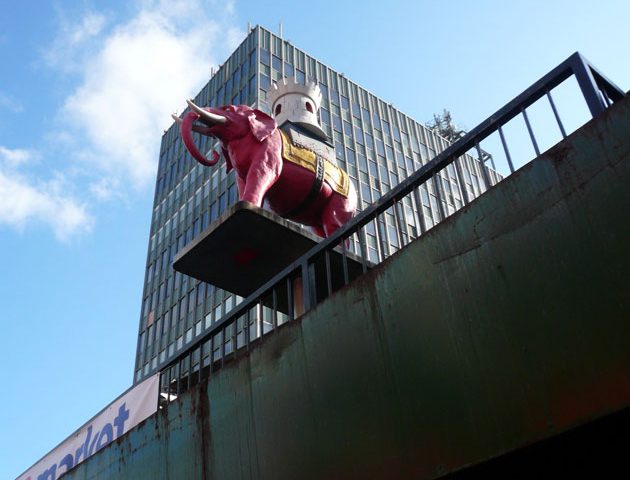
It’s not clear yet what exactly is in store for the new shopping centre — chances are it’ll be pretty bland though. Let’s just hope they don’t make the same mistakes again. Sad as the shopping centre has become, it seems a shame to demolish it completely, as most of its problems stem from the wider planning choices that were made for the area. It has a sort of crappy charm and an authenticity to it that will be stamped out in the name of ‘regeneration’. Like it or loathe it, The Elephant and Castle shopping centre is a London landmark. Maybe not as attractive as Trafalgar Square or Big Ben, but still very much part of the fabric of the city and a timely reminder of what can happen when things go wrong. I wonder what’s going to happen to the elephant? Let’s hope he’s returned to a more dignified greyish colour…

Further reading: The Car and The Elephant


~ Alistair is raising money for Cancer Research UK during his ride – please wander over to his Just Giving page and donate a little cash. ~


Phil Baines on remembering, the French way

~ While Alistair is away cycling the length of Great Britain, we’ve invited twenty disgustingly talented people to each write a post for our blog. Today’s post is from the redoubtable Phil Baines: designer, writer, teacher, and cyclist. ~

I’ve long had a fondness for wandering old cemeteries, seeing the variety of lettering and types of memorial, but in all my trips to France had given their graveyards little thought.

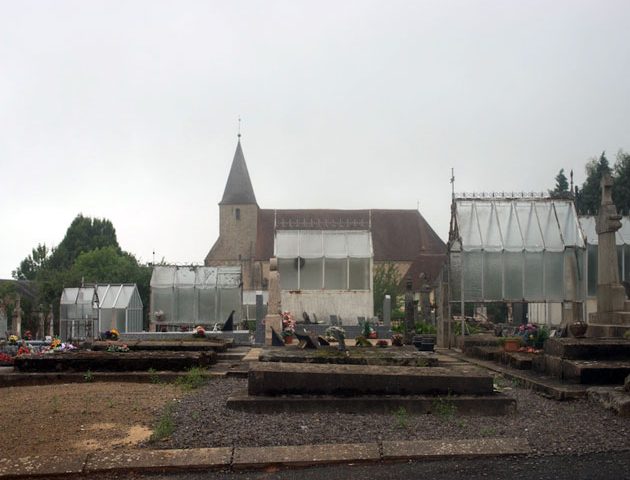
This summer however we spent two weeks in Azerables, a small village near the Creuse valley in northern Limousin, pretty close to the centre of the country. During the first (dull) day we explored the village on foot, and on one of the quieter roads out came across the sight of old greenhouses peeping over a low wall. This turned out to be the cemetery, detached from the church, and so very different to the British kind.

Very few of the graves had the upright carved stone, preferring instead a flat slab with lettering glazed onto ceramic, and occasionally steel, disks or rectangular plates, hung, screwed or inset. The variety of lettering, like our carved versions from the 18th and 19th centuries, was quite astonishing too, with many looking like pages from an old typesetting book or Nicolete Gray’s book Nineteenth century ornamented typefaces.

And then the greenhouses, an optional extra, a poor man’s version of the Grecian temple (some of which were also present), generally open-fronted and acting as protection to ornaments, beautiful ceramic flowers, occasional real ones, and additional plaques or photographs.

Its always a treat to see something familiar treated differently, and this cemetery was a pleasure to explore. It was lovely to see the care lavished on all aspects of the markers, the variety of slabs, the profusion of lettering styles, and the introduction of these iron and glass mini-cathedrals to contain the flowers, other tablets and carriers of memory. A pleasure too to see how remarkably well cared for everything was. Azerables spoiled me though: elsewhere the double-glazing salesmen have been round, modern alternatives now exist, factory-made industrial units, without the individual touches which make the originals such a treat. They serve the same purpose, but don’t fit in at all.


~ Alistair is raising money for Cancer Research UK during his ride – please wander over to his Just Giving page and donate a little cash. ~

How to build an igloo

St Bride Design Auction

Designauction

Ah, this looks like a tasty little number. The St Bride Library is having an auction on 19 March, with half the proceeds going to the library. No word yet on what the Lots are, but with Paula Scher, AVA, True North, Magma, YCN, Hudson Bec, Spin, Studio 8, Johnson Banks and SEA all involved, it's gonna be a humdinger.

And while you're getting busy with you diary, stick in the Eighth annual Friends of St Bride Library Conference which will bring all manner of design brilliance to town on 23 and 24 April.

Cold War Modern at the V&A

Coldwarmodern

As we mentioned in the previous postCold War Modern is the new show at the V&A.

And it's a corker.

The show looks at the decades after the Second World War, when the two super powers were locked in a constant battle of one-upmanship. Not content with just having bigger and better missiles, they tried to outdo each other in every area – leading to an explosion of fantastic art and design. As the blurb from the show points out "Modern life after 1945 seemed to promise both utopia and catastrophe".

The major strength of the exhibition is its sheer breadth. It pulls in Dieter Rams's beautiful designs for Braun (which still exert a powerful influence on the some modern day classics); paintings by Gerhard Richter, Robert Rauschenberg and Richard Hamilton; Archigram's Walking Cities; Otl Aicher's lecture posters; as well as bits from Eames, Corbusier, and Buckminster Fuller. Deeply brilliant.

The show runs until 11 January, but heck, why wait?

Pictures © V&A Images

7thsyndikate: the cat is out of the bag

7thsyndikate 

As we mentioned a while back, we've been getting some strange email communications from a group called 7thsyndikate.

They've led us a merry modern dance, which even took us via the classified ads of a London newspaper. Sometimes it felt like we were getting warm, but more often it felt like we were getting cold. But they made us smile in the process, so we're not gonna get too grumpy. 

We could tell you who they are and what it's all about, but if you're still caught up in the game, it would rather spoil things.
And we're looking forward to seeing what happens next – we've fallen under their sphere of influence, and heck, we like it.

London Open House Weekend

Openhouse  

Blimey O'Reilly – where does the time go?  
  
One minute the trees and shrubs are just beginning to make with the shoots and buds, and then two seconds (and a billion gallons of rain) later, it's practically Autumn.  
  
And one of the heralds of Autumn is almost upon us again – the wonderful Open House London takes place on 20 and 21 September.  
  
Open House is an annual event where you get to wander about inside buildings old and new, and often get to meet the architects and/or owners too. There's a huge range of buildings that participate, from small residential homes to full-on skyscrapers. Though unfortunately 30 St Mary Axe (also known as the Gherkin), pictured above, isn't one of them this year, which is a damn shame.  
  
You can get the full programme from the Open House online shop, either snailmailed to you or downloadable as a pdf.
You may need to book for some events; and if you do, be sure to cancel your booking if you can't make it, otherwise they're going to ban you from all future events. Scary!